July 2, 2026

A blocked toilet in London can be a real hassle. It disrupts daily routines and can lead to bigger issues. Knowing what to do...

Did your latest water bill feel more like a car payment? A sudden increase is the number one sign of a hidden water leak. You can’t see it and you might not hear it, but you’re definitely paying for every gallon as it soaks silently into the ground instead of reaching your home. This unexpected cost is often the first and only clue that a pipe is broken somewhere underground.
That shockingly high water bill isn’t the only symptom, however. Learning how to tell if you have a water leak underground involves looking for other subtle signs. You might notice a patch of lawn that’s suspiciously green, a constantly soggy spot in your garden, or even hear the faint sound of running water when all your taps are off. These little mysteries are your property’s way of signalling a problem.
Before you start imagining a backhoe tearing up your lawn, take a breath. The immediate fear for most homeowners is the potential destruction required to find a leak in a garden water line. Thankfully, finding the source is no longer a destructive guessing game. Modern professionals use precise technology to pinpoint the exact location, allowing for a targeted repair that saves your landscaping and your peace of mind.
Because you cannot see the pipe, you must learn to read the environment. Your property will often give you clues that water is escaping where it shouldn’t.
For those on a water meter, this is often the first red flag. If your usage habits haven’t changed but your bill has spiked, that water is going somewhere. A sudden jump suggests a major rupture, while a slow, steady increase over months indicates a pinhole leak that is gradually worsening.
If the flow from your shower or kitchen mixer feels weaker than usual, it could mean water is diverting out of a breach in the supply line before it reaches your house. While pressure can fluctuate due to utility company work, persistent low pressure usually points to a leak on your side of the boundary.
During dry spells, look for areas of your lawn, patio, or driveway that remain wet or muddy. If you have concrete or paving, you might notice water seeping up through the joints or darkening the stone, even when it hasn’t rained.
Water escaping under pressure vibrates the pipe. In a quiet house, usually at night, you might hear a constant hiss, whoosh, or drumming sound coming from the walls or floors. If your boiler is off and no toilets are refilling, but you still hear flow, you likely have a leak.
This is the most severe symptom. If underground water erodes the soil beneath your home, the building may start to settle unevenly. Look for new cracks in drywall, doors that stick in their frames, or gaps appearing between skirting boards and the floor.
Gone are the days of “dig and hope.” Professional leak detection specialists act more like investigators, using a suite of advanced technologies to triangulate the exact position of a leak.
This is the stethoscope of the plumbing world. Escaping water creates a distinct noise frequency as it leaves the pipe and hits the surrounding soil. The pitch and intensity of this sound depend on the water pressure and the size of the hole.
Plumbers use highly sensitive electro-acoustic microphones to amplify this sound. By walking the line of the pipe and listening at intervals, they can hear the leak’s vibration. As they get closer to the source, the sound becomes louder and clearer. Advanced units have filters to block out background noise—like traffic or wind—allowing the engineer to focus solely on the frequency of the leak.
While similar to standard acoustic devices, ground microphones (often called “elephant’s feet”) are designed specifically for listening through hard surfaces like concrete, asphalt, and floor tiles. They are protected from wind noise and are incredibly sensitive to the low-frequency thumping or vibration caused by water hammering against the ground beneath a slab. This is crucial for leaks under driveways or internal floors.
Water has a different thermal mass than dry soil or concrete. As water escapes a pipe, it changes the temperature of the surrounding material. In many cases, the escaping water is cooler than the surface ground in summer, or warmer in winter (especially if it’s a hot water line).
Thermal imaging cameras detect these subtle temperature differences. To the naked eye, a floor looks uniform. Through an infrared camera, a leak might appear as a spreading blue (cold) or red (hot) bloom. This allows plumbers to map the spread of moisture without removing a single tile.
For drainage pipes and sewer lines (which are wider than water supply pipes), plumbers use CCTV drain cameras. A small, waterproof camera mounted on a flexible rod is pushed into the pipe system. The plumber watches a live feed on a monitor, looking for cracks, collapsed sections, or root intrusion. While this is less common for narrow freshwater supply tubes, it is the gold standard for wastewater leaks.
This diagnostic method helps isolate the leak to a specific section of pipe. Plumbers attach a pressure gauge to the system and pump air or water into the line to a specific level. If the gauge needle drops, the line is compromised. By capping off different sections of the plumbing network and repeating the test, they can determine exactly which run of pipe holds the leak (e.g., the run between the street and the house, or the internal kitchen feed).
This is perhaps the most sophisticated tool in the box. A leak noise correlator uses two sensors placed on the pipe at two different access points (for example, at the external stopcock and the internal rising main).
The leak sound travels along the pipe wall to both sensors. Because the speed of sound is constant for a given pipe material and diameter, the computer can calculate the time delay between the sound reaching sensor A versus sensor B. The correlator then uses an algorithm to pinpoint the leak’s location within centimetres. It is essentially GPS for water leaks.
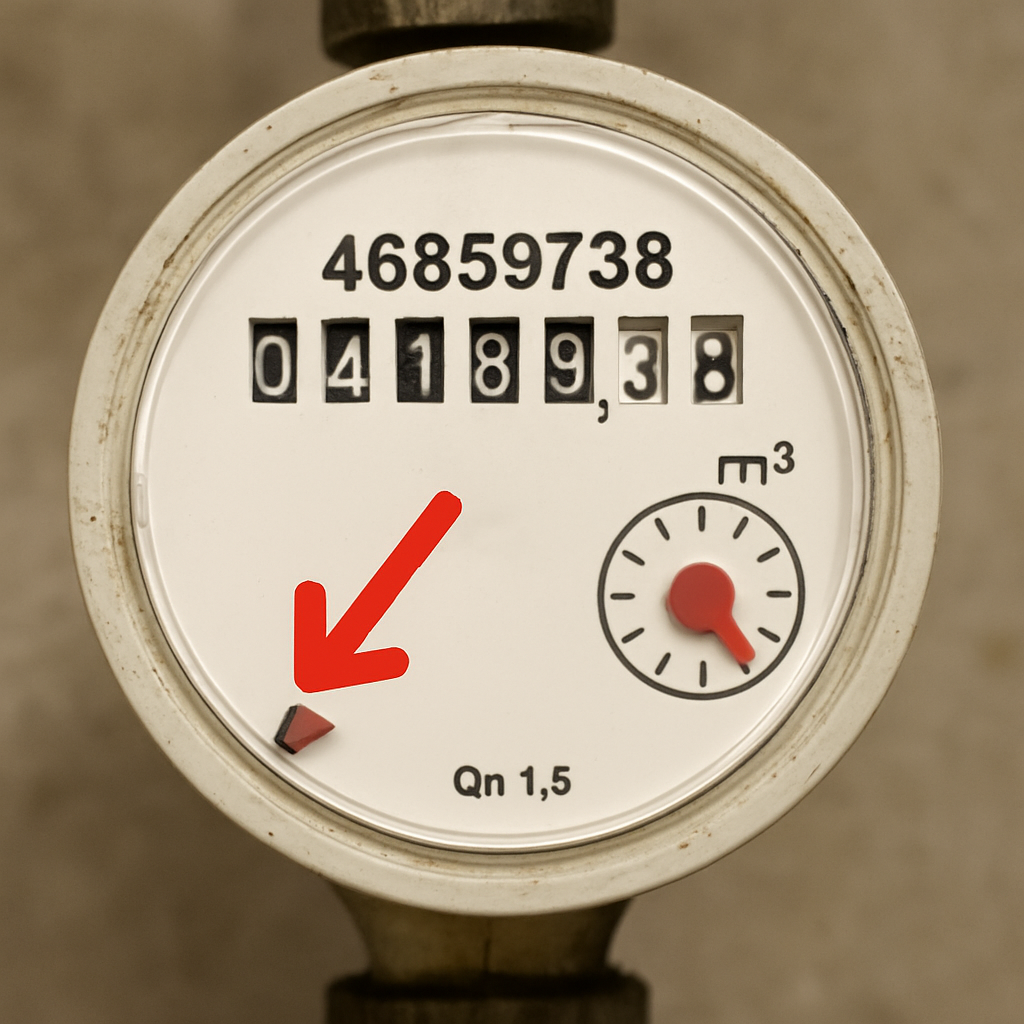
Before calling a professional, there’s a simple, definitive way to confirm if your home is silently losing water. Your own water meter is the best tool for the job, and you can get a clear answer in about 10 minutes.
Ready to play detective? Here’s how to perform a water meter leak test:
Any movement on that little dial, no matter how slow, is your proof. It means water is passing through the meter and into your property’s pipes, even when you think everything is off. If the indicator is completely still, you can breathe a sigh of relief. But if it was turning, you’ve just confirmed the problem isn’t in your head; it’s in your plumbing. This confirmation is the first critical step to finding the source, whether it’s a leak in your garden’s water line or under your home’s foundations.
Once your meter test has confirmed a leak, you can start looking for other clues to narrow down its location. Sometimes, the most obvious sign is in your garden. If you notice a patch of grass that’s unusually green and lush, or if you see persistent water pooling in your garden when it’s not raining, you’re likely looking at a break in the main water line that runs from the meter to your house.
The evidence might also appear inside your home, pointing to a more challenging problem. Pay attention to new cracks forming in your foundations or a specific spot on your floor that feels strangely warm. These are classic symptoms of a slab leak—a leak in one of the water pipes running beneath your home’s concrete foundations. Because these are so difficult to access, they often require professional slab leak detection services.
A more dramatic clue can be a sudden, noticeable drop in your home’s water pressure. If turning on a shower feels more like a drizzle than a blast, it could be one of the signs of a broken water main on your property. A significant break allows a large volume of water to escape before it ever reaches your taps, reducing the pressure throughout your entire system.
Finally, trust your ears. In the quiet of the night, when no water should be running, do you hear a faint hissing or dripping sound coming from a wall or floor? That subtle sound is often the leak itself. While these clues help you understand the general location of the problem, pinpointing the exact spot for a repair without destroying your property is a job for modern technology.
The thought of fixing an underground leak probably brings to mind images of a backhoe digging a long, muddy trench across your lawn. For a long time, that kind of destructive guesswork was the only way to find the source of the problem. It was expensive, messy, and left homeowners with a major landscaping project after the plumbing was fixed.
Thankfully, technology has completely changed the game. Professionals now use non-invasive leak detection methods, a modern approach to underground water leak detection that uses advanced equipment to find the exact location of the leak before any digging begins. This means they can pinpoint the problem with surgical precision, turning a huge potential mess into a small, manageable repair.
This is the key difference a plumbing leak detection specialist brings to the job. Instead of arriving with just a shovel and a hopeful guess, they use sophisticated electronics to investigate the problem from the surface. One of their most common tools works much like a doctor’s stethoscope for your pipes.
One of the most effective professional techniques is acoustic leak detection. A plumbing leak detection specialist uses highly sensitive ground microphones and sophisticated headphones to listen for tell-tale sounds underground that are completely inaudible to the human ear. They aren’t just listening for running water; they are hunting for the unique audio fingerprint of a leak.
So, what does a hidden leak sound like to a professional? When water escapes a pressurised pipe, it creates a distinct “hiss” or “whoosh” right at the source of the break. This specialised listening gear, often considered the best equipment for finding water leaks in many situations, is engineered to filter out background noise from traffic or appliances and amplify only the specific frequencies of escaping water. The specialist methodically listens at various points above the suspected pipe path, homing in on the sound.
By following this sound to where it is loudest, the technician can pinpoint the leak’s exact location, often within a foot or two. This incredible precision is the real value for you as a homeowner. It turns a destructive, full-garden excavation into a small, targeted dig, saving you from a massive landscaping bill and a huge headache. While sound is a primary clue, the choice between acoustic vs thermal leak detection depends on the situation; sometimes, specialists need to “see” the leak instead.
Beyond just listening for a leak, professionals can often see its hidden signature. They do this with a technique called infrared thermography, using a special infrared camera for water leaks that visualises temperature. The core idea is simple: water escaping from an underground pipe is almost always colder than the surrounding soil or flooring. As this water saturates the area, it creates a distinct cold spot on the surface. An infrared camera is specifically designed to see this temperature differential, instantly highlighting the problem area on its screen.
This ability to see temperature through solid surfaces is a game-changer for one of the most feared homeowner issues: the slab leak. Instead of resorting to destructive guesswork, a specialist providing slab leak detection services can simply scan your floors. A growing cold anomaly on the thermal image guides them directly to the source of the water under the concrete, often pinpointing the leak with incredible accuracy. This turns a potentially massive demolition job into a precise, manageable repair.
Together with acoustic listening, these advanced non-invasive leak detection methods are designed to find the problem without creating a bigger one. By using sound and heat as their guides, specialists ensure the fix is both efficient and minimally disruptive.
It’s a fair question: how does a sturdy, buried pipe suddenly spring a leak? More often than not, the answer is simply age. This is one of the most common reasons what causes underground water pipes to leak. Many older homes have metal water lines, and over decades, these pipes can corrode—essentially rusting from the inside out or reacting with minerals in the soil. Eventually, the pipe wall becomes thin and weak, allowing water to escape through tiny pinholes or cracks.
Beyond simple wear and tear, the ground itself can be an adversary. Soil isn’t static; it shifts, settles, and expands with moisture and temperature changes. This slow but powerful movement puts immense stress on rigid pipes, which can bend or shear until they break. In the same way, invasive tree roots are naturally drawn to the condensation on water lines and can wrap around a pipe, slowly crushing it over time.
Sometimes, the problem comes from the water flowing inside the pipe. Your home’s plumbing is designed for a specific range of water pressure. However, surges from the municipal supply can over-stress your entire system. If the pressure from the city’s water main is consistently too high, it can weaken pipe joints and fittings, eventually causing one to fail. This is one of the more subtle signs of a broken water main’s impact on your property.
From slow corrosion to sudden ground shifts, these issues are rarely a homeowner’s fault. They simply highlight why finding the exact spot is so crucial for an effective repair. Before any digging begins, a professional will always use a utility line locator service to mark other buried lines, ensuring the fix doesn’t create a new problem.
Armed with an understanding of how leaks are confirmed and located, you can now hire the right expert with confidence. Before you pick up the phone, use this checklist to ensure you’re hiring a true plumbing leak detection specialist who will protect your property and your wallet. Asking these questions will help you find an expert, not a guesser.
You are an informed customer ready to manage the solution. That hidden leak is not an expensive catastrophe waiting to happen. It’s simply a specific, findable issue you are now equipped to resolve, ensuring the final main water line repair cost is for a precise fix, not a torn-up garden.
When facing the stress of an underground leak, you need a team that combines technical expertise with rapid response. OnTime Plumbers is one of London’s top-rated plumbing companies, trusted by homeowners and businesses across the city for fast, accurate underground water leak detection.
Our engineers use advanced acoustic listening devices, tracer gas, and thermal imaging to locate hidden leaks with minimal disruption to your property. We understand that every minute counts when water is escaping; that is why we prioritise efficiency and precision in every job we undertake.
With transparent pricing, 24/7 availability, and hundreds of five-star reviews, OnTime Plumbers is the go-to choice in London for reliable water leak solutions. Don’t let a hidden leak damage your property or drain your finances—let the experts handle it.
Contact us today on +442080546069
A blocked toilet in London can be a real hassle. It disrupts daily routines and can lead to bigger issues. Knowing what to do...
Few things disrupt the rhythm of a busy day quite like a blocked sink. Whether you are rushing to get ready for work in...
Finding a reliable plumber in London can be a daunting task. With so many options, how do you choose the right one? Customer reviews...