
How to Find a Leak in The Central Heating System
Central heating systems are essential for keeping homes warm and comfortable. However, leaks can disrupt this comfort and lead to costly repairs. Identifying a leak early can save you from significant water damage and high energy bills.
This guide will help you find leaks in your central heating system. We’ll cover practical tips and methods for effective leak detection.
Whether you’re a homeowner or a DIY enthusiast, understanding how to spot leaks is crucial. Regular maintenance can prevent leaks and extend your system’s lifespan.
Let’s explore the steps to identify and address central heating leaks efficiently.
Understanding Central Heating Leaks: Causes and Signs
Central heating leaks can stem from various causes. Common culprits include corroded pipes, loose fittings, and damaged seals. High water pressure may also contribute to these issues over time.
Recognising the signs of a leak is vital to prevent further damage. Reduced water pressure or unusual noises may indicate a problem. Additionally, damp patches or water stains around your home can signify a hidden leak.
Here are some common signs to watch for:
- Unexplained water on floors near radiators.
- Persistent dampness on walls or ceilings.
- Frequent boiler pressure drops.
Visual and auditory cues are key to spotting issues early. Examining these elements can save you the headache of dealing with extensive water damage.
Initial Checks: Visual Inspection and Common Leak Points
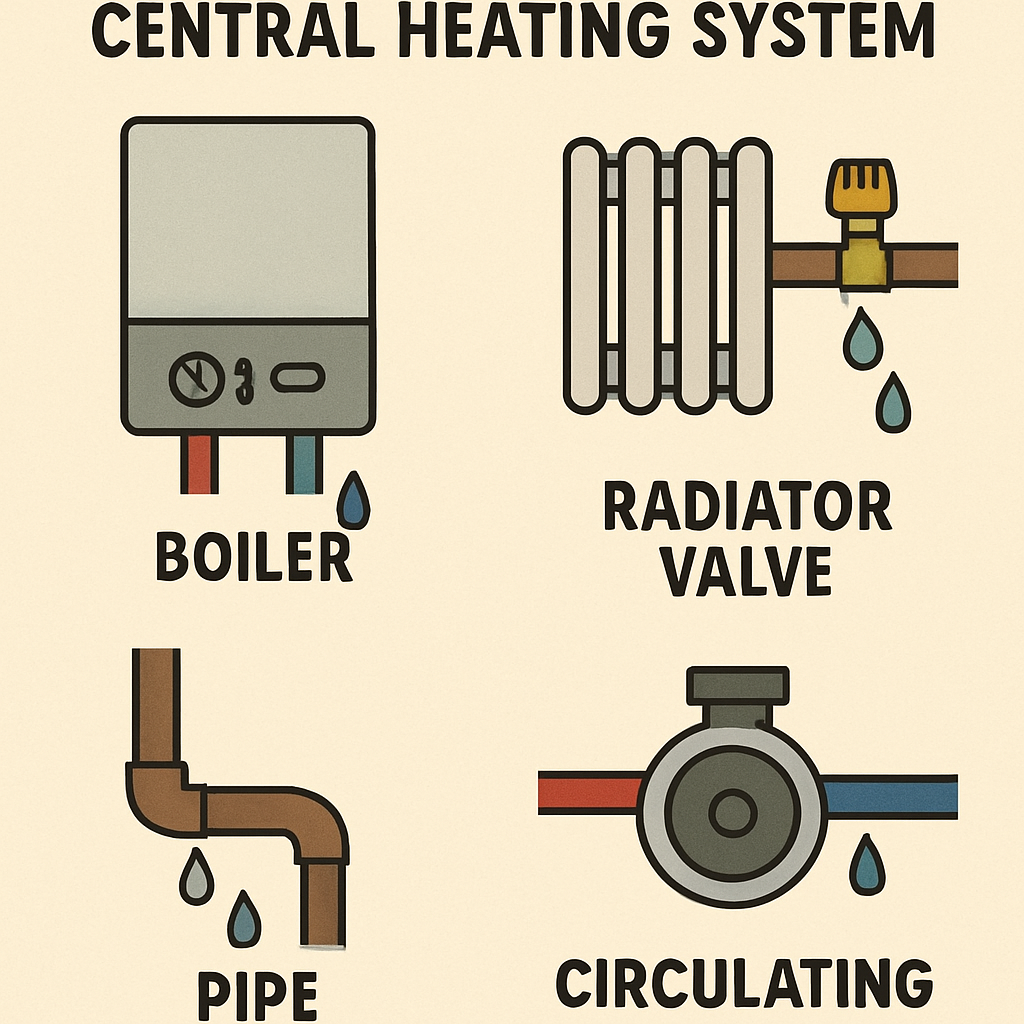
Starting with a visual inspection is crucial in leak detection. Carefully examine visible components of your central heating system. This includes radiators, boilers, and exposed pipes.
Look for signs of water damage. Damp spots, rust, or mineral build-up are typical indicators.
Ensure that all valves are tightly closed and free from signs of wear.
Focus on these common leak points:
- Joints and pipe connections.
- Radiator bleed points.
- Boiler seals and fittings.
Listen for any hissing or dripping sounds. These auditory cues can lead you directly to the source of a leak. They are often more telling than visual clues.
Finally, check your boiler’s pressure gauge. A sudden drop in pressure can signal a leak. Combining these initial checks provides a comprehensive starting point in identifying central heating system issues.
Step-by-Step Guide: How to Find a Leak in the Central Heating System
Finding a leak in your central heating system can feel overwhelming. By following a methodical approach, you can pinpoint issues efficiently. Below is a step-by-step guide to help you through the process.
First, turn off the heating system. This will stop the pressure and help minimise potential damage while you inspect. Ensure the system is safe to work on.
Next, perform a detailed visual inspection. Pay extra attention to accessible areas such as visible pipes and radiators. Look for signs of water damage like discoloured patches or bubbling paint.
Once the visual inspection is complete, move on to listening for unusual sounds. Hissing or dripping noises often indicate a leak. Sound can help identify leaks in places that are hard to see.
Also, check the boiler’s pressure gauge. Monitor it for unexpected drops. A steady decline in pressure is often a sign of a leak.
If visual inspections and sound monitoring come up short, consider adding central heating leak detection dye to the system. This dye will help by visibly marking leak points when it appears.
Conduct a pressure test for further confirmation. This involves pressurising the system and watching for pressure decreases. Consistent pressure drops can reveal small, hard-to-find leaks.
Keep an eye on suspicious areas over time. Continual observation helps in detecting leaks that appear under specific conditions. Note any recurrent problems for long-term solutions.
Use the following checklist to ensure thorough inspection:
- Switch off the system for safety.
- Visually inspect all accessible parts.
- Listen for abnormal noises.
- Monitor the pressure gauge.
- Utilise detection dye if needed.
Each of these steps provides essential information. Together, they form a comprehensive guide to effectively locating leaks in your central heating system.
Advanced Leak Detection Methods
When basic methods fall short, advanced leak detection can be invaluable. These techniques are highly efficient and precise. They save time and prevent potential damage.
One of the most effective methods is thermal imaging. This non-invasive method spots leaks through heat patterns. It identifies the exact leak locations by detecting temperature variations in pipes.
Acoustic detection is another powerful tool. This method involves specialised devices that can pinpoint leaks by picking up sound waves. It is particularly useful for locating hidden leaks in walls or floors.
Advanced leak detection services offer these technologies with professional expertise. Although more costly than DIY options, they provide quick and accurate results. Such precision is essential for complex central heating systems.
When considering these methods, weigh the benefits against the central heating leak detection cost. Professional help might be the best option for challenging leaks, or if you lack equipment. Here’s what you can choose from:
- Thermal imaging for heat patterns
- Acoustic detection for sound-based location
- Professional services for expert solutions
Using Central Heating Leak Detection Dye
Using central heating leak detection dye is a straightforward method. The dye is added directly to the heating system. Once circulated, it helps to reveal leaks.
The dye is usually a bright colour. Leaks become evident where the dye escapes, marking the problem area. This is helpful in visually complex situations where leaks are hard to spot.
Before using dye, ensure your system is compatible. Dye can sometimes stain, so consider its impact. Follow product instructions closely for the best results.
Here’s a simple checklist to use dye effectively:
- Add dye to the system
- Monitor where the dye appears outside pipes
- Ensure system compatibility before use
Detection dye provides a visual confirmation of leaks, making it an accessible option for many homeowners.
Thermal Imaging and Acoustic Detection
Thermal imaging and acoustic detection are modern innovations. They offer unique advantages for finding elusive leaks. These methods are efficient and require minimal disruption.
Thermal imaging utilises infrared technology. It detects leaks by highlighting temperature differences in pipes and walls. This is effective even if the leaks are hidden.
Acoustic devices work differently. They amplify leak sounds for easier detection. These devices can find leaks by isolating the distinct sound of escaping water.
Consider these tools to enhance your detection capabilities:
- Infrared cameras for visual confirmation
- Acoustic devices for sound detection
- Professional services for complex evaluations
These advanced methods might require an investment. However, they can save significant time and money in the long term.
DIY Leak Detection Tips and Maintenance Advice
Detecting leaks on your own can be both rewarding and cost-effective. Simple DIY methods can often pinpoint issues without much expense. Regular checks help catch problems early, reducing long-term damage.
Start by listening carefully around your heating system. Hissing or dripping sounds often signal leaks. An ear on a radiator or boiler can reveal hidden water escape points.
Next, carry out visual inspections. Look for damp patches or rust on pipes and radiators. Consistent monitoring can prevent costly repairs further down the line.
Consider these additional DIY checks:
- Monitor water pressure levels regularly.
- Bleed radiators to release trapped air.
Maintenance is crucial for preventing future leaks. Regularly maintain your system by scheduling checks and cleaning parts. Pay attention to wear and tear on pipes and joints.
Incorporate these habits into regular system upkeep:
- Ensure all valves are tightly shut.
- Insulate pipes to prevent freezing.
These DIY tips not only aid in leak detection but also enhance system efficiency. Being proactive ensures a longer lifespan for your heating setup.
When to Call a Professional: Leak Detection Services and Costs
Sometimes, professional help becomes necessary to address central heating leaks. Complex leaks hidden within walls or under floors may require advanced detection tools. Expert services offer precise solutions, saving both time and resources.
Consider reaching out to specialists if you’ve tried DIY methods without success. Professionals utilise advanced techniques, such as thermal imaging, to detect subtle leaks. They can also carry out repairs that might be too complicated for DIY enthusiasts.
Before deciding, evaluate the potential cost. While professional services can be expensive, they ensure comprehensive repairs. A skilled technician can prevent further damage, justifying the investment.
Here’s what to consider when choosing professional services:
- Experience and certifications
- Service warranty
- Estimated cost and coverage
Preventing Future Central Heating Leaks
Proactive measures can effectively prevent future central heating leaks. Regular maintenance and vigilant inspections are key to avoiding costly repairs. Investing time now can save you significant trouble later.
Routine checks of your system can detect early signs of potential leaks. Look out for rust, mineral buildup, and corroded connections. Fixing minor issues before they escalate is crucial.
Consider upgrading older components to more reliable ones. Improved materials and technology can withstand pressure better, reducing leak risks. Proper insulation and system balance are also essential.
To maintain a leak-free system, remember these preventive tips:
- Regularly inspect and service your boiler
- Bleed radiators to remove trapped air
- Insulate pipes, especially in cold areas
Frequently Asked Questions About Central Heating Leak Detection
Many homeowners have questions about central heating leak detection. Knowing what to expect can help you manage issues efficiently.
Here are some frequently asked questions:
- What are signs of a central heating leak? Look for unusual noises, damp spots, or reduced pressure.
- Can I find leaks myself? Yes, with some basic checks and tools.
- Should I hire a professional? If you can’t locate the leak or if it’s complex, calling an expert is recommended.
- How often should I check for leaks? Regular maintenance, at least once a year, is advisable.