How to Unblock a Sink and Restore Smooth Drainage
A blocked sink can disrupt your daily routine. It can cause frustration and inconvenience. But don’t worry, you can fix it yourself.

This guide will show you how to unblock a sink. You’ll learn effective methods to restore smooth drainage.
Whether it’s a kitchen or bathroom sink, we’ve got you covered.
We’ll explore various techniques and tools. From simple home remedies to more advanced solutions, you’ll find the right approach.
Get ready to tackle that stubborn clog and enjoy a free-flowing sink again.
Common Causes of a Blocked Sink
Understanding what causes a blocked sink is key to solving the issue efficiently. Different substances can build up and obstruct your drain.
In kitchens, grease and food scraps are frequent culprits. They accumulate over time, gradually narrowing the pipe.
Bathrooms often face blockages from hair and soap scum. These combine to form a sticky, tangled mess that blocks water flow.
Here’s a quick list of common sink blockers:
- Grease and oil
- Food particles
- Hair
- Soap scum
- Foreign objects
Preventing these substances from entering your sink is important. By being mindful, you can prevent future clogs and maintain smooth drainage. Regular maintenance, like using a strainer, makes a big difference too.
Essential Tools and Safety Tips for Sink Unclogging
Having the right tools and safety tips can make sink unclogging easier and safer. Equip yourself with basic tools like a plunger, plumber’s snake, and wet/dry vacuum.
Safety is crucial to avoid injury or damage. Always wear rubber gloves to protect your hands from harsh chemicals or sharp objects.
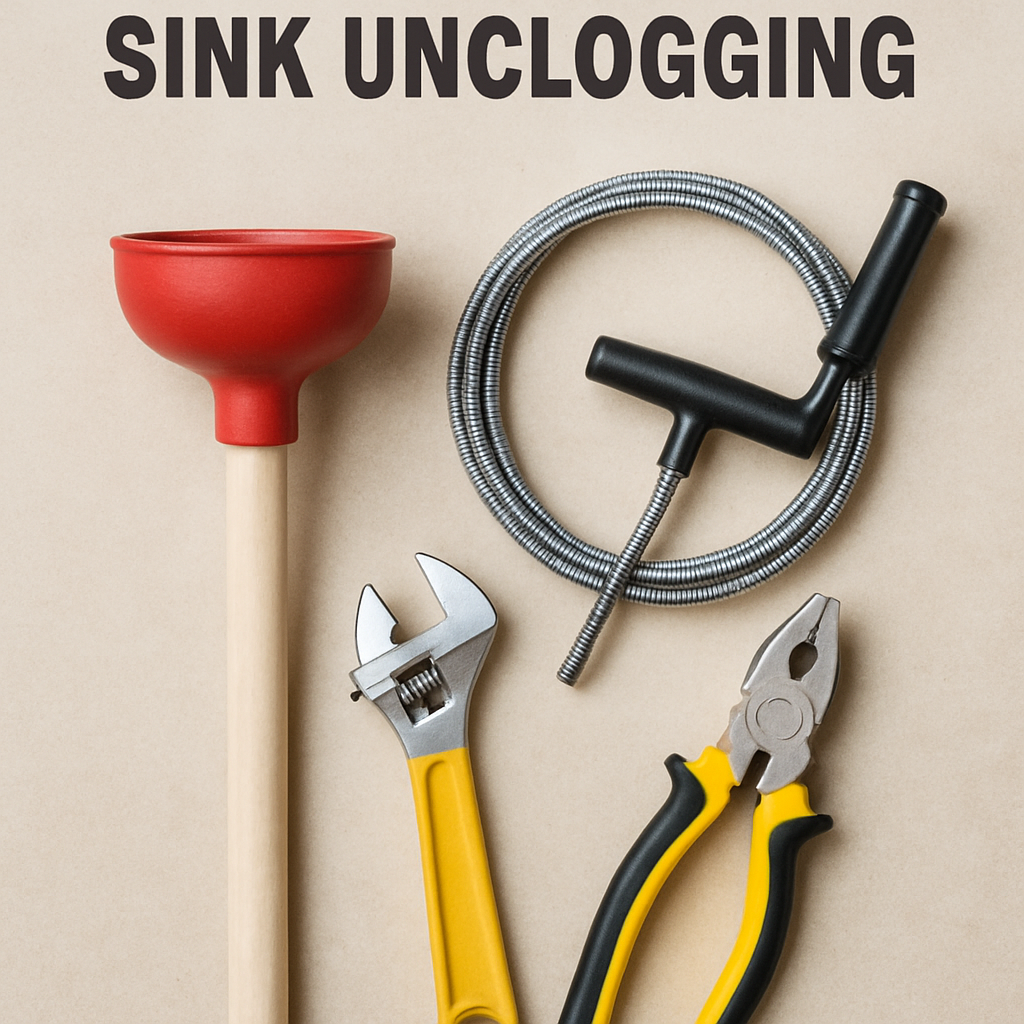
Here’s a handy list of essential tools for unclogging:
- Rubber gloves
- Plunger
- Plumber’s snake
- Wet/dry vacuum
- Bucket
Remember to ventilate the area well when using chemicals. Following these tips reduces risks and ensures a more efficient unclogging process. With these precautions, you’re prepared to tackle any blockages with confidence.
Quick Assessment: Identifying the Type and Location of the Blockage
Before diving into unclogging methods, assess the blockage carefully. Knowing the type and location of a clog helps choose the best approach.
Start by checking for common culprits like grease, hair, or soap scum. Each type requires specific strategies for effective clearing.
Here’s a quick checklist to identify blockages:
- Listen for gurgling sounds
- Observe slow drainage
- Check for any visible debris
Pinpointing whether the clog is near the drain or deeper in the pipe is key. A thoughtful assessment guides your next steps, preventing wasted effort. This evaluation informs your strategy and boosts your chances of success.
Step-by-Step Methods to Unblock a Sink
Unblocking a sink can seem daunting but is achievable with the right approach. Follow these step-by-step methods to handle clogs effectively.
Each method targets specific causes, from simple solutions to more involved strategies. Choose based on the type and location of the blockage for best results.
Method 1: Boiling Water Flush
Boiling water is a quick, simple fix for minor clogs. It helps dissolve debris like soap scum.
Steps:
- Boil a kettle of water.
- Slowly pour it into the drain.
- Wait a few minutes and repeat if needed.
This method works best on soap-based or light grease clogs. Always ensure your pipes can handle hot water safely.
Method 2: Baking Soda and Vinegar Solution
This classic method is a natural way to clear many clogs. It combines basic chemistry with cleaning power.
First, pour half a cup of baking soda into the drain. Then, slowly add a half cup of vinegar.

Procedure:
- Let the mixture fizz for 15 minutes.
- Rinse with hot water to flush out debris.
This reaction breaks down organic material, helping to clear most blocks. It’s eco-friendly and effective for common issues.
Method 3: Plunger Technique
A plunger is your go-to tool for stubborn clogs. It’s effective for dislodging blockages by creating strong suction.
Start by covering the drain overflow with a wet cloth. Then, position the plunger over the sink drain.

Steps:
- Press down firmly to create suction.
- Pump up and down vigorously.
- Repeat until water drains freely.
This method is versatile and useful for solid obstructions. Ensure a tight seal for optimal results.
Method 4: Manual Removal and P-Trap Cleaning
Sometimes, manual intervention is necessary. Removing the P-trap clears stubborn debris manually.
Procedure:
- Clear any blockages.
- Rinse the P-trap thoroughly.
- Reassemble and test the flow.
This method is vital when deep cleaning is required. Ensure proper reassembly to prevent leaks.
Method 5: Using a Drain Snake or Auger
For deep clogs, a drain snake is invaluable. It reaches further down your pipes to tackle tough blockages.
Insert the snake into the drain, turning the handle to navigate bends. Push until resistance is felt.

Steps:
- Rotate to snag the blockage.
- Pull out debris slowly.
- Rinse with water to clear residue.
This tool is excellent for hair or compacted waste. Exercise care to avoid pipe damage.
Method 6: Wet/Dry Vacuum and Other Sink Unclogging Hacks
A wet/dry vacuum can be a powerful ally. It sucks out clogs through strong suction.
Seal the vacuum nozzle over the drain, adjusting settings to the highest suction level.

Steps:
- Form a tight seal.
- Vacuum to remove blockage.
- Test with water for clearance.
This method suits resilient clogs, offering a less conventional yet effective solution.
Method 7: Chemical and Enzyme-Based Drain Cleaners
Chemical cleaners provide a potent option for severe clogs. Use them sparingly to avoid pipe damage.
Enzyme-based cleaners offer a gentler, eco-friendly alternative. They work gradually to break down organic matter.
Steps:
- Follow label instructions closely.
- Allow time for chemical or enzyme action.
- Flush with water to clear the drain.
These methods are last-resort options. Favor enzyme cleaners for safety and environmental reasons.
Special Cases: How to Unblock a Sink with Water in It
A sink filled with water presents unique challenges. It’s essential to first remove as much standing water as possible. This allows easier access to the blockage.
Consider using a bucket or cup to scoop out the excess water. Then, assess the situation for effective methods.
Possible Techniques:
- Attempt the plunger technique if blockage is minor.
- A wet/dry vacuum can help remove standing water and clogs.
- Baking soda and vinegar may aid in slowly dissipating the clog.
These approaches target different blockages, providing practical solutions for handling water-filled sinks effectively.
How to Unblock a Sink Without a Plunger
Sometimes, a plunger just isn’t available. Fortunately, there are other ways to tackle sink clogs. Using household items can be surprisingly effective.
Alternative Solutions:
- Mix baking soda and vinegar to naturally dissolve clogs.
- Use a wire coat hanger to fish out obstructions.
- Try a wet/dry vacuum to remove stubborn debris.

These methods leverage everyday tools, providing practical DIY options for unclogging without a plunger. They are easy to apply and often surprisingly effective.
Kitchen vs. Bathroom Sink Clogs: Key Differences and Fixes
Kitchen and bathroom sinks often face different types of clogs. Understanding these differences is crucial to choosing the right fix.
Kitchen sinks typically deal with food particles and grease buildup. This calls for grease-dissolving solutions and careful disposal habits.
Bathroom sinks, however, frequently trap hair and soap scum. This requires different techniques to effectively clear the blockages.
Key Differences:
- Kitchen: Food scraps and grease.
- Bathroom: Hair and soap.

Tailor your approach to the specific type of clog for optimal results. Knowing these differences can save time and frustration.
Preventative Plumbing Tips to Keep Your Sink Flowing
A little preventative care goes a long way in plumbing. Regular habits can keep your sinks and drains running smoothly.
Avoid pouring oils and coffee grounds down your sink. These substances can cause clogs and blockages over time.
Invest in a simple drain strainer. It’s an effective tool to catch debris before it enters your pipes.
Preventative Tips:
- Use a drain strainer.
- Avoid pouring oils.
- Flush with hot water regularly.

Taking these small steps can prevent major headaches. They ensure your plumbing remains in good working order.
When to Call a Professional Plumber
DIY methods are effective, but sometimes a problem requires expert attention. Recognizing when to call a plumber can prevent further issues.
If methods fail or you face persistent clogs, it might be time for professional help. Complex or recurring issues can signal deeper plumbing problems.
Signs to Call a Plumber:
- Recurring clogs
- Gurgling sounds
- Lingering drain odors
Timely professional intervention saves time and frustration. It ensures your plumbing runs efficiently.
Frequently Asked Questions About Sink Repair and Drain Cleaning
People often have questions regarding sink repair and maintenance. Here are some common inquiries and our expert insights to help you.
Can I use chemical cleaners?
Yes, but use them with caution. Frequent use can damage pipes, especially in older systems.
What are signs of a serious clog?
Watch for slow drainage, unusual noises, or persistent odors. These indicate a more severe issue.
What regular maintenance is needed?
- Clean stoppers and strainers
- Use hot water flushes
- Regularly check for leaks
Addressing these questions ensures you maintain a functioning sink. It also helps prevent future clogs.
Restore Smooth Drainage and Prevent Future Clogs
Unclogging a sink doesn’t have to be daunting. By following these steps, you can tackle most blockages with ease and confidence.
Regular maintenance is key to preventing future issues. Educate your household about proper waste disposal, and regularly flush drains with hot water to ensure your sink stays clear and functional.
Why Homeowners Trust OnTime Plumbers for Emergency Plumbing in London
When plumbing problems strike, you need a company that responds fast, works efficiently, and gets the job done right the first time. OnTime Plumbers is a trusted choice for homeowners and businesses across London, delivering reliable emergency plumbing solutions 24/7. From sudden leaks and burst pipes to hot water failures and blocked drains, our experienced engineers arrive fully equipped to diagnose and fix issues without delay.
Blocked sinks are one of the most common and disruptive plumbing problems. Whether caused by grease buildup, food waste, or hidden pipe obstructions, our team can unblock a sink and restore smooth drainage quickly and safely. We use professional tools and proven techniques to clear blockages at the source, preventing recurring problems and protecting your pipework from damage.
What sets OnTime Plumbers apart is our commitment to transparent pricing, fast response times, and quality workmanship. We take the stress out of plumbing emergencies by offering clear advice, long-lasting repairs, and friendly customer service you can rely on—any time of day or night.